
Menu
AI Workflow Automation for Small Businesses: The Complete 2026 Guide

Services

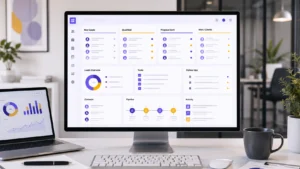
Running a Small Business in 2026 is more demanding than ever. Customers expect faster responses, employees juggle multiple tools, and routine work often steals valuable hours from your day. Hiring more people is not always the answer. Instead, many growing companies are turning to AI Workflow Automation for Small Businesses to simplify daily work, reduce costs, and improve results without increasing their workforce.
Modern Artificial Intelligence has changed how businesses operate. Instead of spending hours on repetitive activities, companies can now build AI-powered workflows that automatically handle emails, update records, organize projects, and even assist with customer communication. Whether you own a Marketing Agency, a retail store, or a growing Startup, the right automation strategy allows your team to focus on work that truly drives Business Growth.
In this guide, you’ll learn what AI Workflow Automation for Small Businesses is, why it matters in 2026, and how you can use it to improve Business Operations, increase Productivity, and build smarter systems that grow alongside your company.
What Is AI Workflow Automation for Small Businesses?
Businesses have always looked for ways to complete work faster. Today, AI Workflow Automation for Small Businesses goes beyond simple automation by combining Artificial Intelligence with everyday business tools. Instead of only moving information between applications, AI can understand data, recognize patterns, and recommend or perform actions automatically. This creates Business Process Automation that feels intelligent instead of mechanical.
For a small business owner, this means fewer repetitive tasks, faster decisions, and smoother daily operations. Modern Workflow Automation connects different software platforms into one efficient process. As a result, teams spend less time switching between applications and more time serving customers, improving products, and growing revenue through better operational efficiency and workflow management.

What is AI workflow automation?
At its core, AI Workflow Automation for Small Businesses combines Artificial Intelligence, Machine Learning, and Large Language Models (LLMs) to automate business activities that previously required human effort. Unlike traditional scripts that only follow fixed rules, modern AI understands context, summarizes information, writes responses, categorizes requests, and supports better decision-making. This creates intelligent automation that adapts to changing business needs rather than simply repeating predefined actions.
How AI workflow automation works
Every automated workflow begins with a trigger. A customer submits a contact form, receives an invoice, or sends an email. The information then moves through an automation platform, where AI analyzes the request, applies business rules, and performs the required actions. This may include updating a CRM, assigning tasks to the Sales Team, notifying Customer Support, or storing documents inside Google Workspace. These connected apps create seamless workflow integration, allowing information to move without manual effort.
AI vs Traditional Workflow Automation
Traditional automation follows fixed instructions. If one condition changes, the workflow often stops working correctly. AI automation behaves differently because it understands language, recognizes intent, and makes informed decisions using Generative AI, Natural Language Processing, and Predictive Analytics. Instead of only completing task automation, AI supports smarter process optimization, helping businesses build flexible automated business systems that continue improving over time.
Why AI automation is transforming small businesses
Small businesses often work with limited budgets and lean teams. Every saved hour directly impacts profitability. AI helps automate customer communication, project updates, internal approvals, and reporting while reducing manual mistakes. Businesses adopting AI-powered workflows often improve business efficiency, strengthen workflow optimization, and create reliable operational workflows without adding unnecessary complexity. Even companies with little technical experience can launch no-code automation or low-code automation solutions using modern workflow tools.
Why AI Workflow Automation Matters in 2026
The business landscape has changed dramatically over the last few years. Customers expect instant responses, employees rely on multiple digital platforms, and competition continues to grow. Businesses that still depend on manual processes often struggle to keep pace. That is why AI Workflow Automation for Small Businesses has become a practical investment instead of a future trend. Companies using automation complete work faster, improve customer experiences, and create scalable systems that support long-term success.
Technology is also becoming easier to adopt. Modern workflow builder platforms require little or no coding knowledge, making automation accessible to almost every industry. Whether your company manages sales, finance, healthcare, or consulting services, AI helps simplify business operations while creating consistent processes that improve both employee satisfaction and customer trust.
Growing demand for AI-powered operations
Organizations across the United States are investing in AI because it improves speed and accuracy while reducing manual effort. As digital transformation continues, businesses are replacing disconnected systems with cloud automation, workflow integration, and End-to-End Automation that connect departments into one streamlined operation. Companies that adopt automation today are positioning themselves for stronger growth tomorrow.
Save hours on repetitive tasks
Many daily activities consume valuable time without creating meaningful business value. Data entry, email sorting, appointment scheduling, invoice generation, and follow-up reminders can all be automated. This repetitive task automation allows employees to focus on customer relationships, creative problem-solving, and revenue-generating work instead of routine administration.
Reduce operating costs
Hiring additional employees is expensive. AI reduces costs by automating repetitive work while improving consistency. Businesses spend less time correcting errors and more time improving customer service. Better workflow management also reduces delays, creating smoother operations across every department.
Increase team productivity
Employees perform better when repetitive work disappears. Automation keeps projects moving, updates systems automatically, and ensures every team member receives accurate information at the right time. Strong Team Collaboration combined with intelligent workflows increases overall Productivity without increasing workload.
Scale without hiring more employees
Business growth usually creates additional operational work. Instead of expanding headcount immediately, automation allows companies to process larger workloads using the same team. This approach improves scalability while maintaining service quality and supporting long-term automation strategy goals.
Improve customer experience
Customers value fast, accurate communication. AI automatically responds to inquiries, routes requests, schedules meetings, and keeps clients informed throughout every stage of the journey. Faster response times build trust, improve satisfaction, and create stronger long-term relationships that support sustainable business growth.
Signs Your Small Business Needs AI Workflow Automation
Every business reaches a point where manual work begins to slow progress. If your team spends more time managing daily tasks than growing the company, it may be time to adopt AI Workflow Automation for Small Businesses. Recognizing these warning signs early helps you improve business productivity, reduce unnecessary effort, and build smarter systems before operational challenges become expensive.
Ignoring these issues often leads to missed opportunities, frustrated employees, and inconsistent customer experiences. Fortunately, modern automation solutions make it easier than ever to replace outdated processes with smart workflows that improve speed, accuracy, and long-term business efficiency.
Your team spends hours on repetitive work
If employees repeatedly copy data, update spreadsheets, send follow-up emails, or create reports manually, valuable time disappears every day. Automating these activities through repetitive task automation, Business Automation, and workflow optimization allows your team to focus on meaningful work that supports business growth rather than routine administration.
Customer responses are delayed
Customers expect quick answers. Long response times often result from manual processes and disconnected communication channels. AI can automatically acknowledge inquiries, assign tickets, notify the correct department, and assist Customer Support teams by creating faster and more reliable service experiences.
Data is scattered across multiple tools
Many businesses use separate systems for sales, marketing, accounting, and project management. Without proper workflow integration, employees constantly switch between applications and manually transfer information. AI connects these connected apps, creating a centralized workflow that keeps data accurate and accessible.
Manual errors are slowing growth
Even experienced employees make mistakes when entering information repeatedly. Duplicate records, incorrect invoices, and missed follow-ups reduce customer trust. Automated process optimization improves accuracy while creating consistent operational workflows that minimize costly human errors.
Business processes aren't documented
Businesses often depend on employee knowledge instead of documented procedures. When someone leaves the company, important information disappears with them. AI automation encourages standardized workflow management, making every process easier to follow, improve, and scale over time.
Which Business Processes Should You Automate First?
Starting with the right workflows delivers faster results. Instead of trying to automate every department at once, focus on repetitive activities that consume the most time. Early success builds confidence and creates a solid foundation for expanding your automation strategy across the business.
Most successful companies begin with customer-facing operations because these areas directly affect revenue and satisfaction. As confidence grows, they extend automation into finance, HR, internal approvals, and reporting to create fully connected AI-powered workflows that improve overall Business Operations.
Marketing automation
Marketing teams perform many repetitive activities every week. AI can schedule campaigns, organize leads, publish content, monitor engagement, and generate reports automatically. This improves campaign consistency while giving your Marketing Agency or internal team more time to focus on creative strategy.
Lead generation & CRM
Every new lead should move smoothly through the sales pipeline. AI automatically captures inquiries, updates your CRM, qualifies prospects, and assigns leads to the right Sales Team member. Faster follow-ups improve conversion rates and reduce missed opportunities.
Client onboarding
A smooth onboarding process creates a strong first impression. Automation can send welcome emails, collect documents, assign internal tasks, create project spaces, and notify team members automatically. Better Client Onboarding improves customer confidence while reducing administrative work.
Customer support
Support requests often follow predictable patterns. AI categorizes tickets, answers common questions, routes complex issues, and keeps customers informed throughout the process. This creates faster service while allowing human agents to focus on more complex conversations.
Sales follow-ups
Many deals are lost simply because no one follows up on time. AI automatically schedules reminders, sends personalized emails, and tracks conversations, ensuring every prospect receives consistent communication throughout the buying journey.
Finance & invoicing
Finance teams spend significant time creating invoices, processing payments, and tracking expenses. Automation reduces manual work while improving accuracy and keeping financial records updated without constant supervision.
HR & employee onboarding
Hiring new employees involves paperwork, training, document collection, and account creation. AI simplifies onboarding by assigning tasks, sending reminders, and preparing resources before the employee’s first day.
Internal approvals
Approvals often create unnecessary delays. AI automatically routes requests to the appropriate manager, tracks progress, and sends reminders until decisions are completed, keeping projects moving efficiently.
Project management
Projects become easier to manage when AI automatically creates tasks, updates deadlines, assigns responsibilities, and notifies team members. Better Project Management improves visibility while strengthening workflow management across departments.
Reporting & dashboards
Business leaders need accurate information to make informed decisions. AI gathers data from multiple systems, builds dashboards, and generates reports automatically. This improves decision-making while reducing hours of manual reporting every week.
10 Best AI Workflow Automation Tools for Small Businesses
Choosing the right software is one of the most important decisions in your automation journey. The best platform depends on your budget, technical skills, existing software, and long-term business goals. Some tools are designed for beginners, while others provide advanced features for growing companies that need highly customized Workflow Automation.
The platforms below have become popular because they simplify Business Process Automation, integrate with hundreds of applications, and support businesses of every size. Whether you need no-code automation, advanced AI Agents, or scalable workflow engine capabilities, these solutions provide reliable options for modern organizations.
ChatGPT
ChatGPT helps businesses create content, summarize documents, answer customer questions, and automate communication using advanced Large Language Models (LLMs). It works well for companies looking to improve daily productivity with conversational AI.
Make.com
Make.com offers a visual automation builder that connects thousands of applications through powerful workflows. It is an excellent choice for businesses seeking affordable low-code automation with flexible customization options.
Zapier
Zapier remains one of the most trusted automation platforms available. It connects thousands of business applications and allows companies to automate workflows without writing code, making it ideal for beginners and growing businesses.
Notion AI
Notion AI combines documentation, project planning, and AI-powered writing into one workspace. Businesses use it to organize knowledge, manage projects, and improve internal collaboration with intelligent assistance.
n8n
n8n is popular among technical teams that require advanced automation with greater flexibility. It supports self-hosting, custom integrations, and highly configurable workflows for businesses with complex operational needs.
HubSpot AI
HubSpot integrates AI into sales, marketing, and customer service activities. Businesses can automate lead nurturing, customer communication, reporting, and marketing campaigns from one centralized platform.
Airtable AI
Airtable combines the flexibility of spreadsheets with powerful databases and AI capabilities. Teams use it to organize projects, automate approvals, and improve collaboration across multiple departments.
ClickUp AI
ClickUp AI enhances project planning by generating tasks, summarizing meetings, creating documentation, and supporting productivity inside one project management platform.
Claude
Claude excels at document analysis, writing assistance, research, and business communication. Many companies use it to summarize reports, draft proposals, and process large amounts of information efficiently.
Microsoft Copilot
Microsoft Copilot integrates directly with Microsoft 365 applications, helping businesses automate emails, presentations, spreadsheets, meeting notes, and daily office tasks while improving employee productivity.
AI Workflow Automation Tools Comparison
Tool | Best For | Pricing | No-Code | AI Features |
ChatGPT | Content creation and business assistance | Free & Paid | Yes | ⭐⭐⭐⭐⭐ |
Make.com | Visual workflow automation | Free & Paid | Yes | ⭐⭐⭐⭐ |
Zapier | Business app integrations | Free & Paid | Yes | ⭐⭐⭐⭐ |
Notion AI | Documentation and knowledge management | Paid | Yes | ⭐⭐⭐⭐ |
n8n | Advanced custom workflows | Free & Paid | Partial | ⭐⭐⭐⭐⭐ |
HubSpot AI | Sales and marketing automation | Free & Paid | Yes | ⭐⭐⭐⭐ |
Airtable AI | Database automation | Paid | Yes | ⭐⭐⭐⭐ |
ClickUp AI | Project management | Paid | Yes | ⭐⭐⭐⭐ |
Claude | Research and writing assistance | Free & Paid | Yes | ⭐⭐⭐⭐⭐ |
Microsoft Copilot | Microsoft 365 productivity | Paid | Yes | ⭐⭐⭐⭐ |
Step-by-Step: How to Build an AI Workflow Automation System
Implementing AI Workflow Automation for Small Businesses does not require a complete business overhaul. The smartest approach is to improve one process at a time. Small improvements create quick wins, build confidence across your team, and make future automation projects much easier to manage. A structured plan also helps you avoid unnecessary costs while creating long-term value.
Successful automation is not about replacing people. It is about giving employees better tools so they can spend more time solving problems, building customer relationships, and growing the business. With the right automation strategy, every workflow becomes more reliable, scalable, and easier to improve over time.
Audit your business processes
Begin by reviewing your daily operations. Identify which tasks consume the most time and where employees repeat the same activities every day. Mapping your existing Business Process Automation opportunities helps you understand which workflows will deliver the highest return on investment before implementing any new technology.
Identify repetitive tasks
Look for work that follows the same pattern every time. Data entry, invoice creation, appointment scheduling, document approvals, email responses, and report generation are ideal candidates for Task Automation. These routine activities rarely require creative thinking, making them perfect for intelligent automation.
Choose the right AI platform
Every business has different needs. Some organizations need simple no-code automation, while others require advanced low-code automation with custom integrations. Select an automation platform that supports your existing software, scales with future growth, and offers strong security features without adding unnecessary complexity.
Connect your apps
Automation becomes powerful when your business software works together. Connecting your CRM, accounting software, communication tools, and Google Workspace creates seamless workflow integration between every department. These connected apps eliminate duplicate work while improving collaboration across the organization.
Build your first workflow
Start with one simple process instead of automating everything at once. For example, automate lead capture from your website into your CRM, assign the lead to your Sales Team, and send a welcome email automatically. Small projects are easier to test and produce faster results.
Test & optimize
Every workflow should be tested before full deployment. Review each automation carefully, identify bottlenecks, and adjust rules when needed. Continuous workflow optimization ensures your system remains accurate as your business evolves and customer expectations change.
Measure ROI
Automation should always produce measurable business value. Track time saved, reduced manual errors, faster customer response times, and increased employee productivity. Measuring performance helps you improve operational efficiency while identifying new opportunities for future automation projects.
Real AI Workflow Automation Examples
The value of AI Workflow Automation for Small Businesses becomes much clearer when you see how real companies apply it in everyday operations. Different industries face different challenges, yet the goal remains the same. Businesses want to eliminate repetitive work, improve customer experiences, and create reliable systems that support long-term growth.
Modern AI-powered workflows are flexible enough to serve almost any industry. Whether you manage clients, products, financial records, or healthcare services, automation helps your team work faster while maintaining consistent quality across every business process.
Marketing Agency
A Marketing Agency can automatically collect leads from website forms, qualify prospects using AI, schedule discovery calls, generate proposals, and update project boards without manual intervention. This allows marketers to focus on campaign strategy rather than administrative work.
Law Firm
Legal professionals manage large amounts of documentation every day. AI can organize contracts, summarize legal documents, schedule consultations, send reminders, and prepare client files automatically while improving document accuracy and response times.
Accounting Firm
Accounting firms process invoices, receipts, payroll records, and tax documents throughout the year. Automation helps categorize transactions, generate financial reports, monitor payment status, and reduce manual bookkeeping tasks while maintaining consistent financial records.
Healthcare Clinic
Healthcare providers can automate appointment scheduling, patient reminders, intake forms, medical record updates, and follow-up communication. Faster administrative processes improve patient satisfaction while allowing healthcare professionals to spend more time delivering quality care.
Ecommerce Store
Online retailers receive hundreds of customer requests every week. AI can process orders, update inventory, send shipping notifications, answer common support questions, and recommend products based on customer behavior, creating smoother shopping experiences.
SaaS Company
Software companies often manage onboarding, technical support, subscription renewals, and product feedback. AI automatically guides new users through Client Onboarding, routes support tickets, analyzes customer feedback, and provides product recommendations that improve user retention.
Common AI Workflow Automation Mistakes to Avoid
Automation delivers excellent results when planned carefully. However, rushing implementation or selecting the wrong processes can create frustration instead of efficiency. Understanding common mistakes helps businesses build stronger systems while avoiding expensive corrections later.
The goal should never be to automate everything immediately. Successful companies focus on improving the right processes, documenting every workflow, and continuously monitoring performance to ensure automation delivers meaningful business outcomes.
Automating broken processes
Automation cannot repair an inefficient workflow. If a process already contains unnecessary steps, AI simply completes those unnecessary steps faster. Improve the process first, then automate it for the best results.
Choosing too many tools
Many businesses purchase several automation platforms before understanding their actual needs. Managing multiple disconnected systems increases complexity instead of improving efficiency. Selecting one reliable solution often creates better long-term results than using several overlapping tools.
Ignoring documentation
Documenting every workflow helps employees understand how automation works and makes future improvements easier. Clear documentation also reduces confusion when new team members join the company or existing workflows require updates.
Poor security practices
Automation often handles sensitive customer information, financial records, and internal documents. Strong security policies, user permissions, and encrypted connections help protect business data while maintaining customer trust.
No workflow owner
Every automated process should have someone responsible for reviewing performance, resolving issues, and improving workflows over time. Clear ownership ensures automation continues delivering value as business requirements change.
No performance tracking
Many businesses automate workflows but never measure results. Monitoring response times, error rates, employee productivity, and customer satisfaction helps determine whether your automation investment is producing measurable improvements.
AI Workflow Automation Best Practices
The most successful automation projects follow simple principles instead of unnecessary complexity. Businesses that begin with achievable goals, review performance regularly, and improve workflows over time often experience better long-term results than companies attempting large-scale automation immediately.
Automation should remain flexible because businesses continue evolving. Customer expectations change, technology advances, and internal processes improve. Regular optimization ensures your automation systems continue supporting growth without becoming outdated.
Start small
Choose one workflow that delivers immediate value. Early success builds confidence across your team and creates a strong foundation for future automation projects.
Build scalable systems
Design workflows that can grow alongside your business. Flexible workflow engine architecture makes it easier to support additional employees, customers, and departments without rebuilding existing processes.
Keep documentation updated
Every workflow should include clear documentation describing triggers, actions, integrations, and expected outcomes. Updated documentation improves consistency and simplifies future maintenance.
Monitor every workflow
Regular monitoring helps identify delays, failed automations, and opportunities for improvement. Continuous review ensures every workflow continues supporting Business Operations effectively.
Review automations regularly
Business needs change throughout the year. Reviewing automation performance every few months allows you to improve existing workflows, remove unnecessary steps, and identify new opportunities to increase business efficiency and strengthen operational workflows.
How Streamaline Helps Small Businesses Automate Operations
Adopting AI Workflow Automation for Small Businesses is much easier when you have the right partner. While automation tools provide the technology, building reliable systems requires planning, process design, and ongoing optimization. That is where Streamaline helps. Instead of offering one-size-fits-all templates, Streamaline creates automation solutions tailored to your business goals, industry, and daily operations.
Whether you want to improve sales, streamline operations, or reduce repetitive work, Streamaline designs intelligent systems that connect your existing software into one efficient workflow. The result is a business that saves time, improves accuracy, and scales with confidence.
AI Workflow Consulting
Every successful automation project begins with understanding how your business works. Streamaline evaluates your existing processes, identifies bottlenecks, and recommends practical automation opportunities that deliver measurable improvements without disrupting your daily operations.
Custom Notion Systems
A well-organized workspace improves collaboration and visibility. Streamaline builds customized Notion AI workspaces that centralize documentation, project tracking, knowledge management, and team collaboration, giving every department one reliable source of information.
CRM Automation
Managing customer relationships manually becomes difficult as your business grows. Streamaline automates CRM, Lead Management, sales pipelines, follow-up reminders, and customer communications, ensuring no opportunity is overlooked while helping your team close deals faster.
AI Integrations
Most businesses already use several software applications. Streamaline connects these platforms using intelligent workflow integration, allowing your systems to share information automatically. This reduces manual work while creating seamless Business Operations across marketing, sales, finance, and customer service.
Process Documentation
Automation works best when every workflow is clearly documented. Streamaline creates structured process documentation that makes workflows easy to understand, maintain, and improve as your company grows.
Ongoing Optimization
Business requirements never stay the same. Streamaline continuously reviews workflow performance, identifies opportunities for improvement, and refines automations to ensure your systems continue supporting long-term Business Growth and operational excellence.
Why Businesses Choose Streamaline Over Other Automation Agencies
Many agencies install automation tools and leave businesses to manage them alone. Streamaline follows a different approach by creating automation systems that are designed around your unique processes, business objectives, and future growth plans. Every workflow is built with usability, scalability, and measurable results in mind.
From the first consultation to long-term support, Streamaline focuses on building partnerships instead of simply delivering software. This approach helps businesses maximize their investment while creating automation systems that continue producing value year after year.
Customized workflows
Every company operates differently. Streamaline designs workflows that reflect your existing processes instead of forcing your business to adapt to generic templates.
Faster implementation
Careful planning and proven implementation methods help businesses launch automation projects quickly while minimizing disruption to daily operations.
AI expertise
The Streamaline team combines expertise in Artificial Intelligence, Workflow Automation, and modern business systems to create practical solutions that solve real operational challenges.
Long-term support
Automation requires continuous improvement. Streamaline provides ongoing guidance, monitoring, and optimization to ensure your workflows remain effective as your business evolves.
Scalable solutions
Whether you are a growing Startup or an established company, Streamaline builds automation systems that scale alongside your organization without requiring complete redesigns in the future.
Frequently Asked Questions
What businesses benefit most from AI workflow automation?
Almost every industry can benefit from automation. Professional service firms, ecommerce businesses, healthcare providers, marketing agencies, consulting firms, accounting companies, and technology startups all use AI to improve efficiency and reduce manual work.
Which AI tool is best for small businesses?
The best tool depends on your business needs. ChatGPT is excellent for content and communication, Zapier and Make.com are ideal for workflow automation, while Notion AI works well for documentation and internal collaboration.
Is AI workflow automation expensive?
Not necessarily. Many automation platforms offer free or affordable plans. Small businesses often recover their investment by saving time, reducing errors, and improving employee productivity.
Can AI replace manual processes?
AI can automate many repetitive tasks, but human expertise remains essential for strategic thinking, customer relationships, and complex decision-making. Automation works best when it supports people rather than replacing them.
Does AI workflow automation require coding?
No. Most modern automation platforms provide visual builders that allow users to create workflows without programming experience. Businesses can often launch their first automation using simple drag-and-drop tools.
How secure is workflow automation?
Leading automation platforms include encryption, access controls, authentication, and compliance features that help protect sensitive business information. Choosing trusted software and following security best practices further reduces risk.
How long does implementation take?
Simple workflows can be implemented within a few days, while more advanced automation projects involving multiple departments may take several weeks depending on complexity.
Can AI automate customer support?
More Than Just an AI Writing Assistant
Yes. AI can answer common questions, categorize support tickets, route requests to the correct department, schedule appointments, and provide instant responses while allowing support teams to focus on complex customer issues.
Final Thoughts
AI Workflow Automation for Small Businesses is no longer a competitive advantage reserved for large enterprises. It has become a practical solution for businesses that want to save time, improve customer experiences, reduce operating costs, and build smarter operations. By automating repetitive tasks and connecting your existing business tools, you create systems that help your team focus on innovation instead of administration.
The journey does not have to begin with complex technology. Start by identifying one repetitive process, improve it, and expand your automation strategy over time. Small improvements often lead to significant business results.
If you are ready to transform your business with intelligent automation, Streamaline can help you design customized workflows that match your goals and support long-term growth.
Book Your Free Strategy Call today and discover how AI-powered automation can simplify your operations, increase productivity, and help your business scale with confidence.