AI Custom Agent can help small businesses reduce repetitive work, connect business systems, and improve everyday operational efficiency. What they need is a practical way to reduce repetitive work, keep information moving between systems, and give small teams more time for customers and growth. This is where an AI agent can become useful.
An AI agent is designed around a specific business process rather than a generic chatbot. It can work with business information, follow defined rules, connect with existing tools, and complete multiple steps within a workflow. For a small business, that could mean qualifying leads, organizing customer requests, updating records, preparing reports, or helping employees find internal information.
What Makes an AI Custom Agent Right for a Small Business?
The best AI custom agent isn’t necessarily the most advanced one. It is the one that solves a clearly defined operational problem.
A useful agent should be able to:
- Understand a specific business workflow
- Work with relevant business information
- Connect with existing tools and systems
- Follow defined instructions and conditions
- Trigger actions when specific events occur
- Escalate important decisions to a person
This makes small business automation more practical because the agent has a defined role instead of trying to replace every human process.
Which AI Custom Agent Should You Build First?
The right choice depends on where your team spends the most repetitive time.
Lead Management Agent
A lead-focused agent can review incoming inquiries, organize lead information, identify potential priority, and trigger follow-up tasks. This can help sales teams respond consistently without manually checking every new inquiry.
Customer Support Agent
A customer support agent can use approved business documentation to help categorize requests, retrieve relevant information, and route issues to the appropriate team member.
Operations Agent
An operations-focused custom AI agents can support recurring administrative workflows such as task coordination, internal updates, documentation retrieval, and operational reporting.
Reporting Agent
A reporting agent can collect information from connected systems, organize recurring updates, and prepare reports for review instead of requiring employees to compile everything manually.
AI Custom Agent vs. Traditional Automation
Traditional workflow automation usually follows predefined rules: when something happens, another action occurs.
An AI agent can add another layer of decision-making. It can interpret information, determine the appropriate next step within defined boundaries, and coordinate multiple actions.
For example:
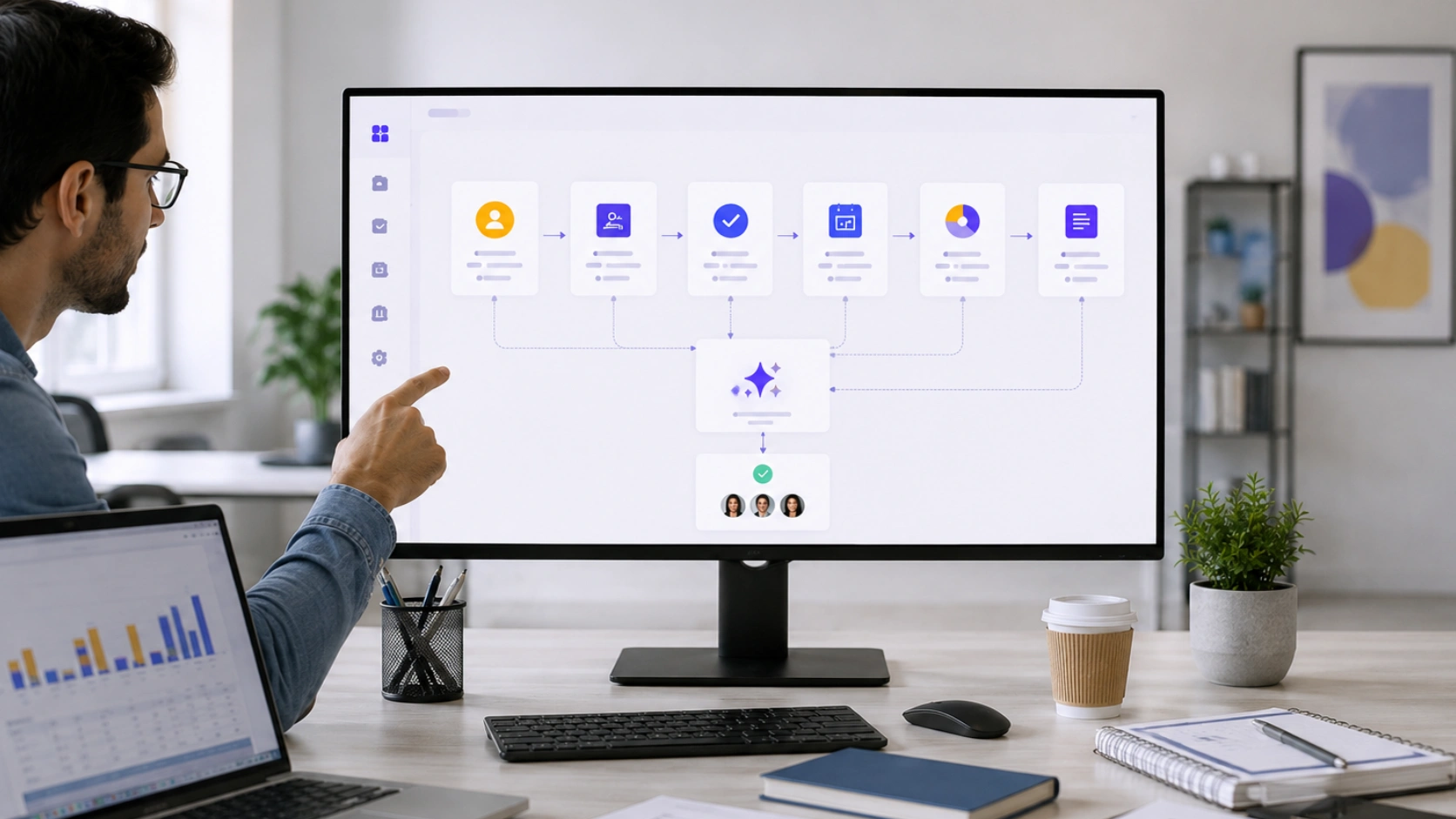
New inquiry → AI reviews information → categorizes request → updates CRM → creates task → alerts team member
The important part is not making the workflow autonomous. It is reducing unnecessary manual coordination while keeping people involved where judgment matters.
How to Build AI Automation Without Creating More Complexity
Start with one repetitive process that has a clear outcome.
Before building an AI custom agent, identify:
- Where the current workflow gets stuck
- Which tasks are repetitive
- What information the agent needs
- Which systems it must connect to
- When human approval is required
This approach creates business automation around an actual operational need instead of adding AI simply because it is available.
Why Customization Matters
Every small business has different tools, processes, customers, and internal requirements. A generic AI tool may help with individual tasks, but a custom solution can be structured around the company’s actual business operations.
Streamaline builds AI-powered workflows, custom AI agents, Notion systems, and integrations around real operational processes. The goal is straightforward: reduce repetitive work, improve information flow, and make everyday execution easier to manage.
The best AI custom agent for a small business is the one that solves a specific problem reliably. Start with a repetitive workflow, connect the right systems, define clear boundaries, and expand automation only after the process works consistently.
Good AI automation doesn’t replace the way your team works. It removes the unnecessary work around it.